Stone Mountain Highland Games is pleased to host two Highland Dancing competitions during the festival.
Both days will feature the traditional "Highland" dances as well as several Scottish National dances. Some of the best dancers from around the country will compete for medals, trophies, and prizes.
Scottish Highland Dancing is a celebration of the Scottish spirit. The dances are a spectacular combination of strength, agility, movement, music, and costume. Unlike other dance mediums, Highland dances are generally danced solo and in competition. Dancers typically dance to traditional Scottish music such as Strathspeys, Reels, Hornpipes and Jigs, all played by an accompanying bagpiper. The dances are made up of different parts, called steps and there are usually four or six steps to a dance.
Highland dancing was traditionally performed by men but is now performed by men and women. It is one of few arenas where men and women compete equally. In most competitions, the number of women competing far exceeds the number of men.
In addition to perpetuating a great cultural tradition, highland dancers appreciate the athletic challenges, competitive goals, performance opportunities as well as the opportunity to meet and become lifelong friends with dancers from other areas, both nationally and internationally, that participation in this ethnic art form/sport affords them.
Be sure and stop by the Highland Dance Pavilion.
Highland Dance on-line registration and mailable forms for the 2026 games can be accessed by clicking on the link below. Entries must be postmarked by October 2, 2026. After that, entries must include late entry fees.
Check back on this page for competition announcements and additional information.
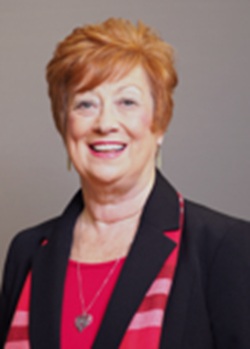
Highland Dance Judge Lynne Erbrick - 2026
Lynne Erbrick began her dancing career at the age of five. She studied Highland Dancing at the Marguerite Reid School of Highland Dancing and Ballet at the Philadelphia Dance Academy. She won the Gaelic College Scholarship and spent two summers studying with J. L. MacKenzie in Nova Scotia. Lynne also spent three months in Scotland where she studied with Elspeth Strathern. While in Scotland, she became the first American dancer to win the Junior World Championship at the Cowal Games. She has also had the honor of judging the Cowal Games numerous times.
She is a Fellow, Life Member and Examiner for the British Association of Teachers of Dancing. She is an Adjudicator for the Scottish Official Board of Highland Dancing. Lynne serves on the Judges Advisory Committee of ScotDance USA and enjoys chairing the Professional Development Committee. She is also the recipient of the ScotDance USA Hall of Fame award.
Lynne was a classroom teacher for 17 years and is a retired School Principal. She has taught Highland Dancing for over 50 years and is currently the
Director of the Pocono Highland Dance Academy in Stroudsburg, PA.
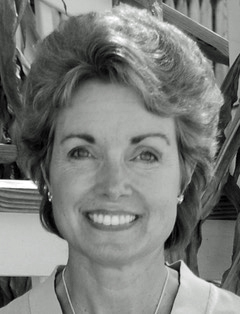
Highland Dance Judge Ann Johnson - 2026
Ann Johnson started Highland Dance lessons in Portland, Oregon when she was 7. She has had her own Highland Dance school in Portland for over 50 years working with children and young adults as they experienced Highland Dance. Some enjoyed successful competitive careers that included winning the USIR and North American Championships, finishing 2nd Runner Up in the Scottish 11 Years Championship, and qualifying for the Juvenile and Junior World Finals at Cowal.
A retired career educator, Ann's passion for Highland Dance allows her to continue teaching, coaching and mentoring young people as they develop valuable life skills through Highland Dance.
Ann is one of five ScotDance USA members who wrote Raising the Barre, a researched based guide for teaching Highland Dance. She is an SDTA Examiner and Life Member, a BATD Life Member and a member of the RSOBHD Adjudicators' Panel who has been fortunate to judge at competitions and championships in the United States, Canada, Scotland and Australia.
She is delighted to have been invited to judge at the 2026 Stone Mountain Highland Games and wishes all competitors the joy of dance and the best luck.
Piper Brian Green - 2026
Brian Green has been piping for over 45 years. He began learning the pipes at the age of ten after watching a performance of a Highland piper, Scottish snare drummer, and Highland Dancer at his elementary school in Upstate NY, receiving his early instruction from Dr. Harold Kirkpatrick.
Brian has been actively piping for Highland dancing for over 30 years. He received valuable feedback on dance piping from Jeannie Brauns (founder of the Braemar Highland Dancers in Upstate NY), as well as pipers Jimmy Fee and John Recknagel.
Brian also competes in pipe bands, having participated in bands at all levels. He is currently a member of the 78th Fraser Highlanders Pipe Band, a Grade 1 pipe band based in Milton, ON. He lives in Gurnee, IL (approximately 40 miles north of Chicago) with his wife Pam (a former Highland dancer and current Scottish snare drummer), and daughters Courtney (a tenor drummer in the 78th Fraser Highlanders) and Fiona.
Piper Doug Frobese - 2026
Doug Frobese began playing bagpipes at age 9 at St. Thomas Episcopal School in Houston, Texas. In 1991, Doug joined the Hamilton (now St. Thomas Alumni) Pipe Band, served as pipe major from 1997 to 2000, and played with the band when it won the grade 2 World Championship in 2019. Doug also plays for Scottish highland dancing competitions and with the Celtic folk bands The Rogues and Scotland Rising. When not piping, Doug is a lawyer in Dallas.
Highland Dances:
Fling
Likely the oldest of the traditional dances of Scotland, the Fling signifies victory following a battle.
Sword Dance
Legend says that warriors danced the Sword Dance prior to a battle. If the warrior touched the swords, it was considered an omen of injury or death.
Seann Triubhas
The Seann Triubhas originated as a political protest dating to 1745 when wearing the kilt was an act of treason. The graceful steps reflect the restrictions of trousers, and the lively quick time recreates the Highlander's celebration of rediscovered freedom.
Reels
Reels are said to have started in a churchyard on a cold morning when the minister was late for the service. Parishioners kept warm by dancing a reel.
National Dances
The National Dances are more modern than the Highland Dances and were developed so women could participate. The costume worn by women is called the Aboyne dress named in honor of the Aboyne Highland Games in Scotland where women were forbidden to wear the traditional Highland outfit. The National Dances are much more rhythmic and balletic; however, they still require quick and precise movements. Some of the dances are the Scottish Lilt, Village Maid, Blue Bonnets and Scotch Measure. Several National Dances are performed in the kilt since they were originally men's dances such as The Highland Laddie, and Wilt Thou Go to the Barracks, Johnny? Men, of course, also perform all of the dances, but they wear the traditional Highland outfit.
.png)